
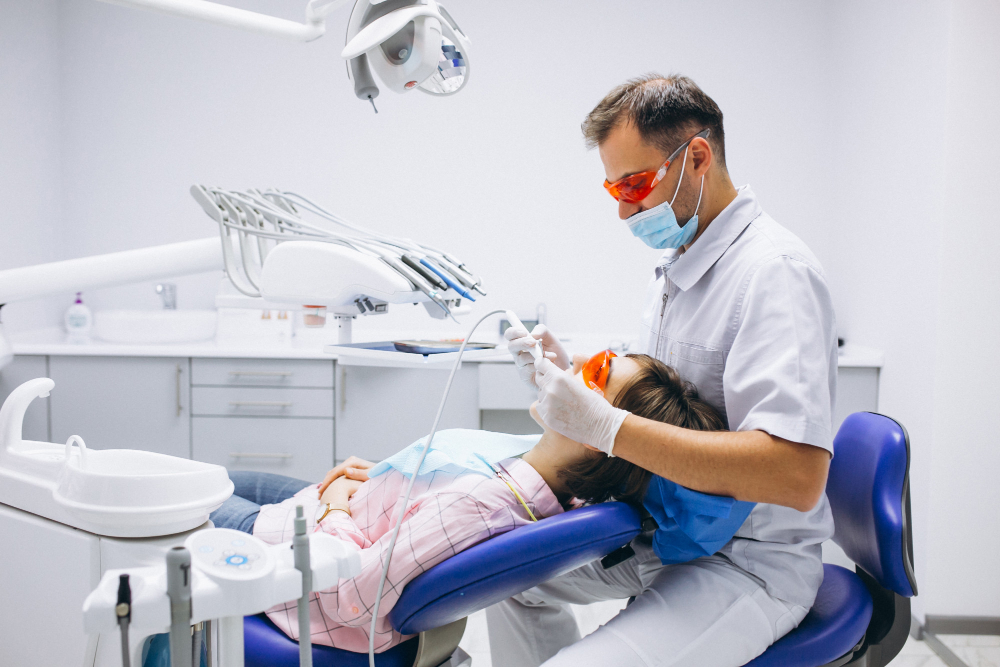
If you have not been to the dentist for several years, the first appointment usually focuses on understanding your current oral health. Your dentist may discuss your concerns and medical history, examine your teeth and gums, take X-rays when appropriate, and explain any findings. Further treatment is generally planned according to clinical priorities rather than completed all at once.
The appointment has been booked. Then the questions start.
What will the dentist find? Will there be a lecture about how long it has been? Does a long gap automatically mean extensive treatment? For someone who has avoided dental care because of anxiety, an uncomfortable experience in the past or simple embarrassment about their teeth, these thoughts can make cancelling feel easier than walking through the clinic door.
A first appointment after several years away is primarily about finding out where your oral health stands now. The dentist needs enough information to separate concerns that require attention from areas that are healthy or simply need monitoring. What happened five or ten years ago provides useful background, but the clinical decisions are based on what is present today.
A Long Gap Does Not Tell the Dentist What They Will Find
The number of years since your last visit cannot predict the condition of your mouth on its own.
Someone who has not attended for several years may have relatively minor findings. Another person who has maintained regular appointments can still develop decay, gum problems, a cracked tooth or another condition between visits. Genetics, diet, brushing and interdental cleaning habits, medications, smoking, medical conditions and previous dental work can all influence oral health.
This is why a returning patient generally needs an examination rather than assumptions about what treatment might be necessary.
If the uncertainty itself has been stopping you from making an appointment, choosing a dentist East Victoria Park patients can visit for general dental care allows the condition of the teeth and gums to be properly assessed rather than estimated from symptoms alone.
The Conversation Before Anyone Looks at Your Teeth Matters
A useful dental assessment begins with information.
The dentist may ask when you last attended, whether anything currently hurts and whether you have noticed changes such as sensitivity, bleeding gums, swelling, broken teeth, difficulty chewing or areas where food repeatedly becomes trapped.
Your medical history also matters. Certain medications and health conditions can affect saliva flow, gum health, healing or the way dental treatment needs to be planned.
This is also the time to mention a previous dental experience that has made returning difficult.
There is no clinical advantage in hiding dental anxiety. If a particular part of treatment concerns you, whether it is injections, unfamiliar sounds, feeling unable to communicate while treatment is happening or simply not knowing what comes next, telling the dental team gives them information they can use when planning the appointment.
You do not need to provide a lengthy explanation for why several years have passed. What is useful is explaining anything that could affect how comfortably the examination proceeds.
What the Dentist Is Actually Looking For
Once the initial discussion is complete, the focus shifts to establishing a current picture of your mouth.
A comprehensive examination may include the teeth, existing fillings or crowns, gums, bite and the soft tissues inside the mouth. The dentist is looking for signs of active disease as well as older dental work that may still be functioning normally.
Common areas assessed include:
- Tooth Decay
- Cracked, Chipped or Worn Teeth
- Existing Fillings, Crowns and Other Restorations
- Gum Inflammation or Periodontal Changes
- Loose or Missing Teeth
- Changes in the Bite
- Areas of Persistent Sensitivity or Pain
- Soft Tissues of the Mouth
A long absence does not mean every filling needs replacing or every irregularity needs treatment. Existing dental work is normally assessed according to its current condition.
For patients returning specifically for preventive care, Dental Gigi’s check-up and clean service explains the diagnostic and cleaning care available at the clinic.
Why X-Rays May Be Recommended After a Long Break
Not everything a dentist needs to assess is visible simply by looking into the mouth.
Dental X-rays may be recommended when clinically appropriate to examine areas such as between the teeth, around existing restorations, roots and supporting bone. Which images are needed depends on the individual patient and what the clinical examination shows.
For someone who has been away from dental care for a considerable period, recent imaging can help establish a new baseline.
This can be particularly important when a tooth looks relatively normal from the outside but there are concerns about decay between teeth, changes beneath an older filling or the supporting structures around a tooth.
Dental Gigi also has diagnostic technology available in-house, including digital X-rays and imaging used when more detailed assessment is required.
The Clean May Not Be Identical to Your Last One
Patients sometimes expect the cleaning portion of an appointment to feel exactly as it did years earlier.
That depends on what has accumulated around the teeth and the condition of the gums.
Plaque that remains on the teeth can mineralise into calculus, commonly called tartar, which cannot be removed effectively with normal brushing alone. If there is a significant build-up after a long interval, cleaning needs may differ from those of someone attending regularly.
Bleeding gums can also indicate inflammation and deserve assessment rather than being treated simply as a cosmetic cleaning issue.
Where gum disease is suspected, the dentist may recommend a more detailed periodontal assessment or further management. Dental Gigi provides information about how gum disease is assessed and managed when the tissues supporting the teeth require additional attention.
The amount of cleaning required is determined by what is found rather than by how long it has been since your last appointment.
Finding Several Problems Does Not Mean Everything Happens That Day
One of the most common fears after a long break is that sitting in the dental chair will immediately lead to several procedures.
Assessment and treatment are different stages.
If the examination identifies several concerns, the dentist can first determine which ones are urgent, which should be treated soon and which can reasonably be monitored or addressed later. This helps turn a vague fear that “everything is wrong” into a clearer sequence of priorities.
For example, an actively infected or painful tooth usually requires different attention from an old restoration that is currently stable but should be observed.
A treatment plan may therefore be organised around:
- Immediate Problems such as significant pain, swelling or active infection.
- Disease Control where decay, gum inflammation or other active conditions need treatment.
- Restorative Care for teeth requiring fillings, crowns or other repairs.
- Preventive Follow-Up to help maintain the teeth and gums once active problems have been addressed.
Not every patient will need all of these stages.
If severe pain, facial swelling or dental trauma is the reason you are returning, the priorities may also differ from a routine appointment. Dental Gigi provides emergency dental care for problems that require more immediate assessment.
Embarrassment Can Make the Problem Feel Larger Than the Clinical Reality
Looking closely at your own teeth every day can create a distorted sense of how unusual a dental problem is.
A broken tooth may feel embarrassing. Visible tartar might make someone reluctant to open their mouth. Missing teeth or decay can become something a person learns to hide when speaking or smiling.
From the clinical side, these are conditions to assess.
The dentist needs to establish what is healthy, what has changed and what treatment options are appropriate. Knowing that brushing has been inconsistent in the past, for example, may help explain what is happening with the gums, but it does not replace an examination or determine the treatment by itself.
This distinction matters because shame often creates another delay. The longer someone waits because they feel embarrassed about waiting, the harder it can become to book the appointment.
Returning to dental care is therefore less about explaining the past and more about establishing a workable starting point.
You Can Ask to Understand the Findings Before Deciding What Comes Next
Clinical terms can become overwhelming when several are introduced during one appointment.
It is reasonable to ask what a dentist has found, why a particular treatment is being suggested and whether an issue needs attention immediately or can be monitored.
Useful questions might include:
- Which Findings Need Attention First?
- What Happens If This Area Is Monitored for Now?
- What Is the Purpose of the Recommended Treatment?
- Are There Different Treatment Options?
- Will Another Appointment Be Needed Before Treatment Begins?
Understanding the reasoning behind a recommendation makes the treatment plan easier to follow.
What If You Are Nervous Once You Are in the Chair?
Dental anxiety does not always appear before the appointment.
Some patients manage the booking, reception and initial conversation comfortably, then become tense once the examination begins. Others feel anxious about a specific part of the visit rather than dentistry as a whole.
Agreeing on a simple way to communicate can help. For example, the dentist can pause if you need a short break, and you can ask for an explanation before moving to another part of the examination.
This is particularly useful after a previous experience where treatment felt rushed or difficult to control.
The first appointment back does not have to prove that dental anxiety has disappeared. Its purpose is to establish your oral health and begin rebuilding a manageable routine for future care.
What Happens After the First Appointment?
The answer depends entirely on what has been found.
If the teeth and gums are generally healthy, the next step may simply involve preventive care and a recall interval suited to your oral health.
If treatment is needed, the dentist can explain the findings and organise appointments according to priority. A filling, gum treatment, extraction, root canal procedure or another form of care would only be recommended where clinically indicated.
For patients who have already lost a tooth, or whose examination identifies a tooth that cannot be predictably retained, replacement options can be discussed separately once the immediate condition is understood. This may include assessing whether dental implants Perth patients consider for missing teeth are clinically suitable, alongside other appropriate replacement options.
This is also where returning after a long gap begins to feel different from anticipating the appointment.
Before the examination, every possible dental problem exists in your imagination at once. Afterwards, there is usually a much more specific picture: what is healthy, what needs attention and what can wait.
That information is what allows treatment decisions to become practical rather than hypothetical.
Dental Care Across East Victoria Park and Nearby Suburbs
Patients return to dental care for many different reasons. Some book because a tooth has started hurting after years without an appointment, while others simply decide it is time to understand where their oral health currently stands. Dental Gigi sees patients from East Victoria Park as well as nearby Carlisle, Bentley, Kensington and Victoria Park for general and ongoing dental care.
For those looking for a dental clinic East Victoria Park patients can access for check-ups, restorative treatment and continuing care, the Albany Highway clinic provides a local option close to surrounding inner Perth suburbs. Patients considering more complex tooth replacement, including implant treatment, may also travel from across Perth for assessment.
Whether the last dental appointment was six months ago or several years ago, the starting point is the same: establish what is happening now and decide what, if anything, needs attention next.
Returning to Dental Care After a Long Break
A long absence from the dentist can make the first appointment feel more significant than it needs to be.
The purpose is not to undo several years in a single visit. It is to establish the present condition of the teeth and gums, discuss anything that has made attending difficult and identify the next appropriate step from the clinical findings.
How long it has been since the last appointment is useful background. It does not, by itself, determine what treatment will be required.
Disclaimer: This article provides general educational information about returning to dental care after a prolonged break. It does not assess the condition of your teeth or gums or predict what treatment you may require. Dental needs vary between individuals, so a qualified dentist should examine your mouth and provide advice based on your clinical findings.