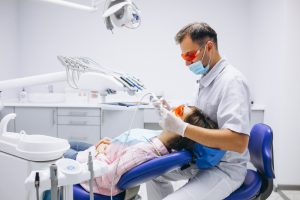

When a dentist examines teeth that a patient feels embarrassed about, the focus is usually on current oral health rather than appearance alone. They assess tooth structure, decay, gums, existing dental work, bite, symptoms and areas that may need imaging, then use those findings to decide what requires treatment, what can wait and what may simply need monitoring.
Feeling embarrassed about your teeth can make a dental appointment seem more confronting than the examination itself.
You might be worried about visible decay, staining, broken teeth, missing teeth, plaque or the fact that dental care has not been a priority for some time. For some people, the bigger concern is what the dentist will think when they see it.
From a clinical perspective, however, the condition of your teeth is information. The dentist needs to work out what is healthy, what has changed, what could become a problem and what actually requires treatment.
That is a very different process from simply looking at whether teeth appear “good” or “bad”.
The Dentist Is Building a Picture of Your Oral Health
A dental examination is essentially a process of gathering information.
Your dentist may look at the teeth individually, assess the gums around them, review previous dental work and ask about symptoms such as pain, sensitivity, bleeding, swelling or difficulty chewing. If something cannot be properly assessed by sight alone, dental X-rays or other imaging may be recommended.
When visiting a dentist Victoria Park, patients do not need to arrive already knowing what treatment they need. The purpose of the assessment is to identify the problems first and then determine which options are appropriate.
Sometimes the examination also shows that an area a patient has been particularly worried about is less urgent than something they had not noticed.
Tooth Structure Matters More Than Whether a Tooth Looks Perfect
One of the first things a dentist considers is how much healthy tooth structure remains.
A tooth may have:
- Decay
- A fracture or crack
- A worn surface
- A broken filling
- A large existing restoration
- Discolouration
- A missing section of enamel or tooth structure
The appearance alone does not necessarily tell the dentist how serious the problem is.
A heavily stained tooth may still be structurally sound, while a tooth that looks reasonably normal from the outside can sometimes have decay between the teeth or underneath an old filling.
This is why treatment decisions depend on the clinical findings rather than how embarrassing the tooth might feel to the person sitting in the chair.
Decay Is Assessed by Its Location and Extent
If dental decay is present, the dentist is interested in more than simply counting cavities.
They need to determine where the decay is located, how far it appears to have progressed and whether enough healthy tooth remains to restore it predictably.
Early changes may sometimes be monitored or managed preventively. More established decay may require a restoration such as a filling. If the damage has extended much deeper into the tooth, a different treatment approach may need to be discussed.
A routine dental check-up and clean provides an opportunity to identify these changes and decide whether they need immediate attention or ongoing monitoring.
Your Gums Provide Important Information Too
Patients who feel self-conscious about their teeth often focus almost entirely on what they can see in the mirror.
The dentist is also paying close attention to the tissues supporting those teeth.
Signs such as bleeding, inflammation, gum recession, plaque deposits or changes around individual teeth can help indicate whether the gums require further assessment.
Gum problems can develop gradually and may not always cause pain. Where signs of gum disease are present, the dentist may assess the depth of the spaces around the teeth and consider whether further periodontal care is required.
The aim is to understand the health of the foundation supporting the teeth, not simply how the smile looks from the front.
Existing Fillings, Crowns and Other Dental Work Are Checked
Old dental treatment becomes part of the examination as well.
A filling or crown does not necessarily need replacement simply because it has been in place for a long time. The dentist will usually look for signs that could indicate a problem, such as deterioration around the margins, fractures, recurrent decay or changes in the tooth underneath.
If an existing restoration is functioning well, there may be no reason to interfere with it.
This is an important distinction for patients who arrive expecting that every old filling or imperfect-looking tooth will automatically need treatment.
Dental care should be based on what the examination shows.
The Dentist May Ask About Things You Have Learned to Ignore
People can become accustomed to dental symptoms, particularly when they have developed slowly.
You may have adapted to:
- Chewing mostly on one side
- Avoiding very cold foods
- Food catching between particular teeth
- Occasional gum bleeding
- A tooth that feels different when biting
- A rough or broken edge
- Persistent bad breath
- A loose filling or crown
These details can help the dentist understand what is happening.
Something that feels minor to you may help explain a clinical finding, while another symptom may turn out to be less concerning once the area has been examined.
There is no benefit in hiding symptoms because they feel embarrassing. They are part of the diagnostic information.
X-Rays Can Reveal Problems That Are Not Visible in the Mirror
Not every dental problem can be seen during a visual examination.
X-rays may be recommended when the dentist needs to assess areas such as between teeth, below existing restorations, around tooth roots or within the supporting bone.
This can be particularly useful when a patient is worried that “everything must be wrong” because several teeth look damaged.
Imaging can help separate what is actually happening from what is assumed to be happening.
It may show which teeth need treatment, which remain stable and whether any areas require further investigation.
Not every patient needs the same type or number of X-rays. The dentist determines what imaging is clinically appropriate according to the individual situation.
Treatment Is Usually Prioritised Rather Than Judged as One Big Problem
One reason embarrassment can become overwhelming is that the mouth may feel like a single large problem.
Dentists generally need to break the findings into individual priorities.
For example, an examination might identify one tooth requiring prompt treatment, several areas of early decay that can be managed differently and some cosmetic concerns that do not require treatment for health reasons.
That creates a much clearer starting point.
The most urgent issue is not necessarily the tooth you dislike the appearance of most. Likewise, having several areas that need attention does not automatically mean everything needs to be treated immediately.
Treatment planning involves considering urgency, symptoms, disease activity, function and what can reasonably be managed over time.
What You Did in the Past Is Not the Only Factor Affecting Your Teeth
Patients sometimes assume that every dental problem will be interpreted as evidence that they did not look after themselves.
Oral health is more complicated than that.
Dental conditions can be influenced by a combination of factors including oral hygiene, diet, saliva, tooth anatomy, previous dental treatment, habits, medical conditions, medications and the length of time a problem has been present.
A useful dental history helps the dentist understand these factors.
If brushing or flossing has been difficult in the past, being open about it can also help the dentist provide advice that is realistic for your current circumstances.
The clinically useful question is not who is to blame. It is what can be done from this point forward.
You Do Not Have to Fix Everything Before Seeing a Dentist
There is no need to somehow make your teeth “presentable” before booking an examination.
Brushing aggressively immediately beforehand will not reverse established decay, repair a broken tooth or remove deposits that require professional cleaning.
What matters more is allowing the dentist to see the current situation accurately.
If embarrassment has been keeping you away, it can also be useful to tell the dental team that at the beginning of the appointment. This gives context to why the visit may feel difficult and allows questions or concerns to be discussed before treatment is considered.
Understanding the Findings Can Make the Situation Feel More Manageable
An examination should leave you with a clearer understanding of your mouth than you had before walking in.
That may include knowing:
- Which areas are healthy
- Which teeth need treatment
- What needs attention first
- What can be monitored
- Whether further imaging is required
- What preventive changes could help
- Which concerns are mainly cosmetic rather than disease-related
You can then discuss the available treatment options and decide how to proceed based on the actual findings.
This is often more useful than trying to predict the outcome beforehand based on how the teeth look.
Dental Care for Victoria Park and Nearby Areas
Dental Gigi is located in East Victoria Park and provides general, restorative, cosmetic, emergency and implant dentistry for patients from the surrounding area. Patients from Victoria Park can attend the nearby Albany Highway clinic for assessment, preventive care and treatment according to their individual dental needs.
The clinic also cares for patients travelling from Bentley, as well as Kensington and Carlisle. Whether the concern is something newly noticed or a problem that has been put off for some time, the starting point is the same: establish what is happening clinically and decide what deserves attention.
Your Teeth Are a Clinical Starting Point, Not a Report Card
Feeling embarrassed can make it seem as though a dentist will see your teeth as a record of everything you should have done differently.
A dental examination has a more practical purpose.
The dentist is looking at the condition of the teeth, gums and supporting structures, identifying disease or damage, assessing what is functioning well and deciding what may need treatment.
Whatever condition your teeth are in when you arrive, that is simply the point from which assessment and future care begin.
Disclaimer: The information in this article is for general educational purposes only and does not replace professional dental advice. The causes and significance of dental changes vary between individuals. A qualified dentist should assess your teeth, gums and any symptoms before recommending treatment.