Dental Implants Perth
Dental Implants Perth
Missing one tooth, several teeth or a complete arch can affect more than the appearance of your smile. Gaps may change how comfortably you chew, alter the way forces are distributed through your bite and, over time, contribute to changes in the surrounding bone.
Dental implants provide a fixed way to replace missing teeth. At Dental Gigi, we provide dental implants in Perth for different levels of tooth loss, from a single tooth implant through to implant bridges and full-arch treatments such as All-on-4.
Our team plans implant treatment carefully before surgery. This includes a clinical assessment, evaluation of the implant site and, where required, 3D CBCT imaging to examine the available bone and surrounding anatomical structures. We also use guided implant surgery and work with local radiology and dental laboratory partners as part of the planning and restoration process.
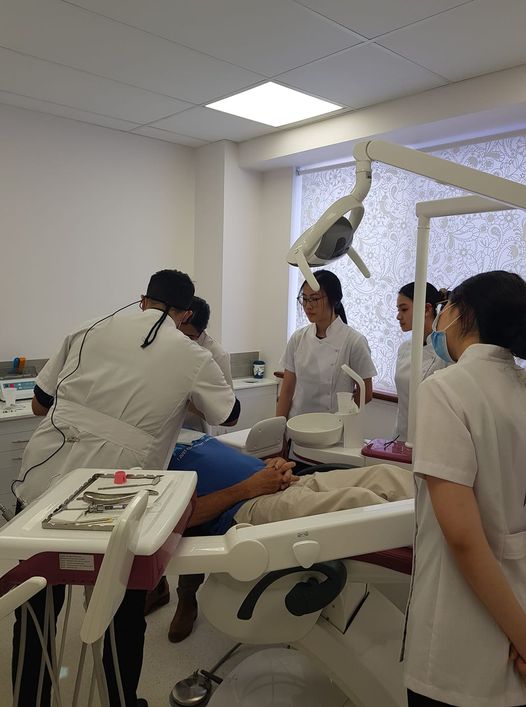
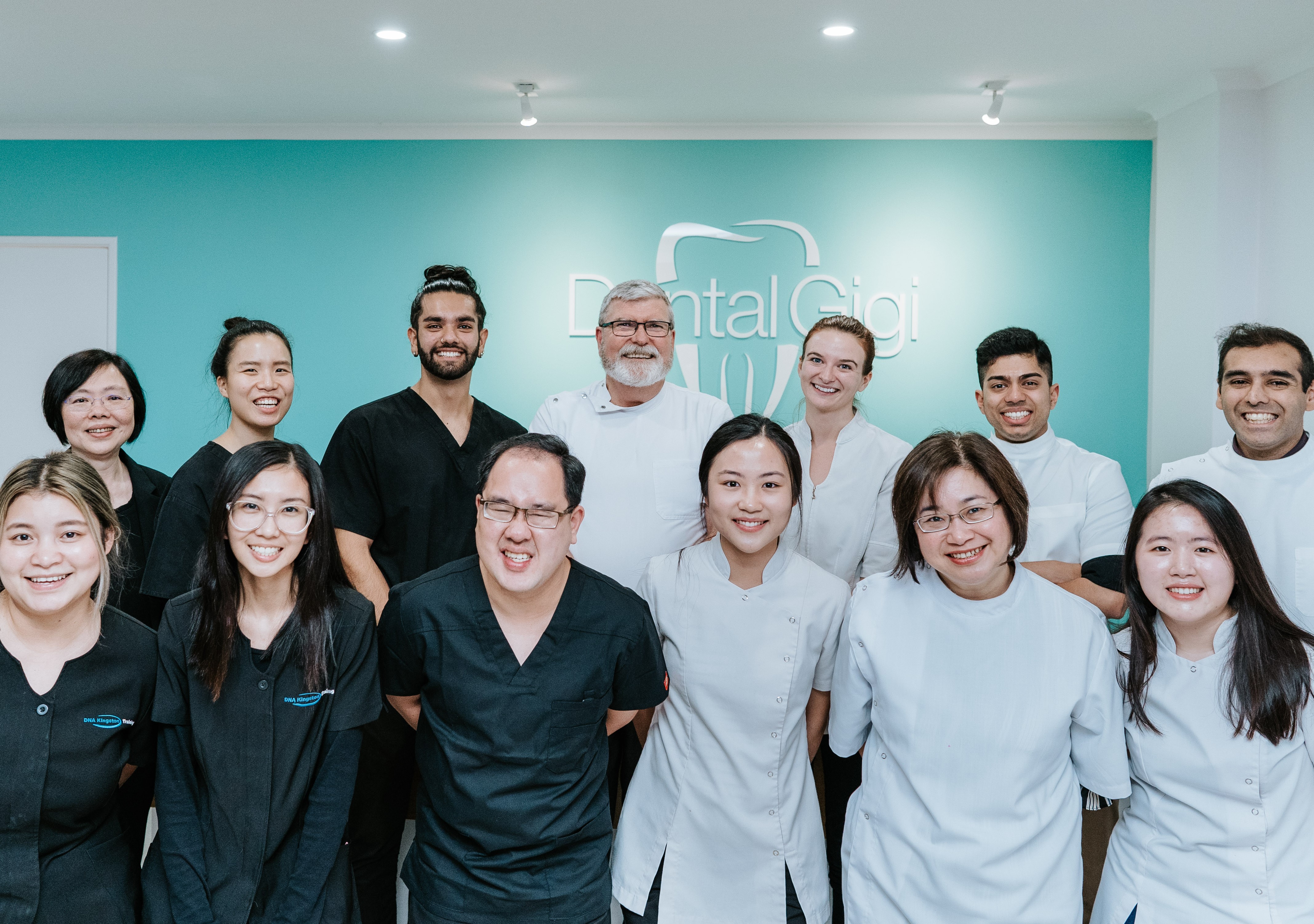
Our Experienced Team
There is no single implant treatment that applies to every missing tooth.
The number and position of missing teeth, condition of the jawbone, gum health, bite, neighbouring teeth and overall health all influence how treatment is planned. For one person, this may involve one implant supporting a crown. Another patient may need two implants supporting a bridge, while extensive tooth loss may require a full-arch approach.
Dental Gigi provides the following implant options:

Single Tooth Dental Implants
A single tooth dental implant may be considered when one tooth has been lost or needs to be removed.
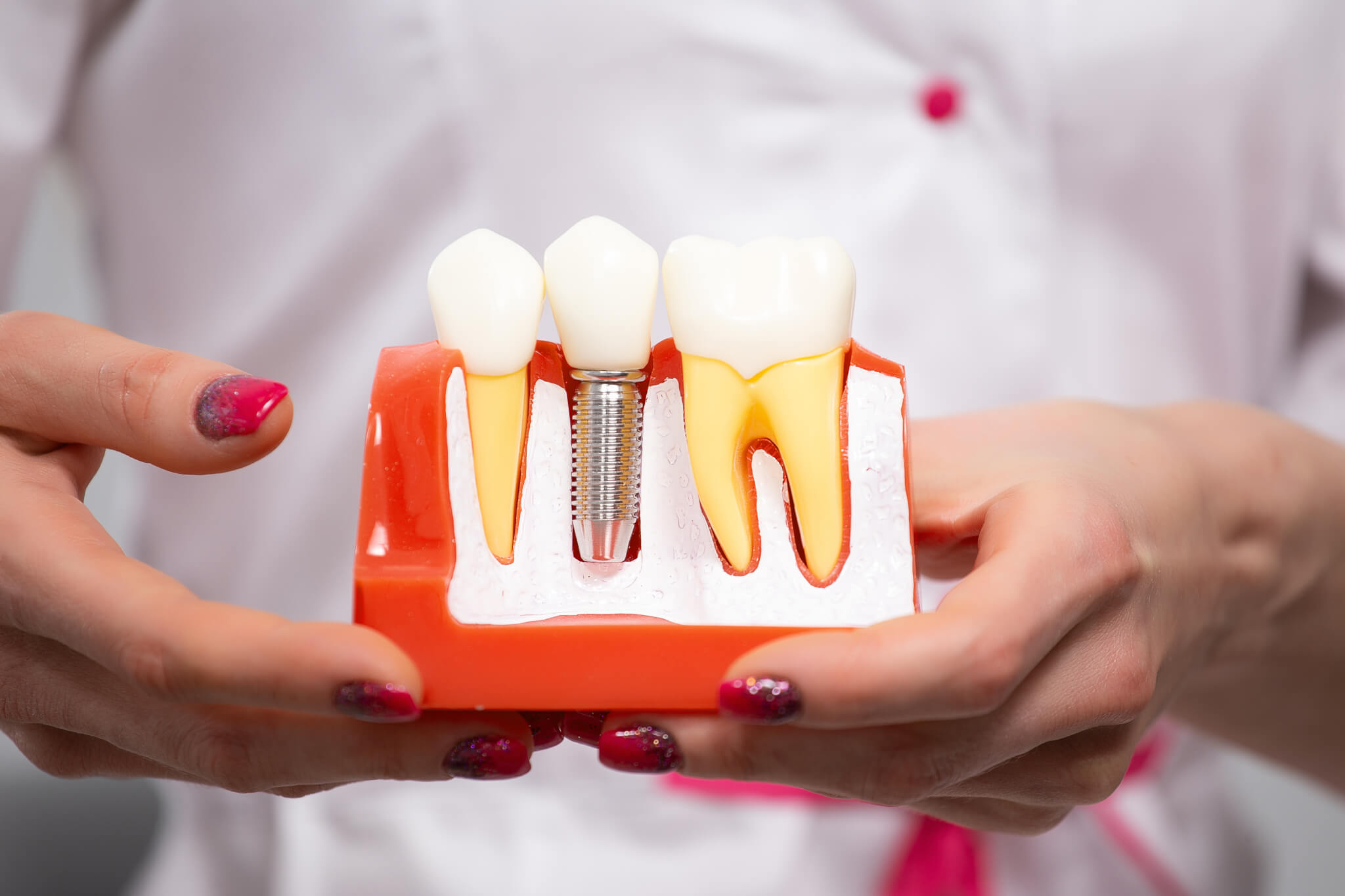
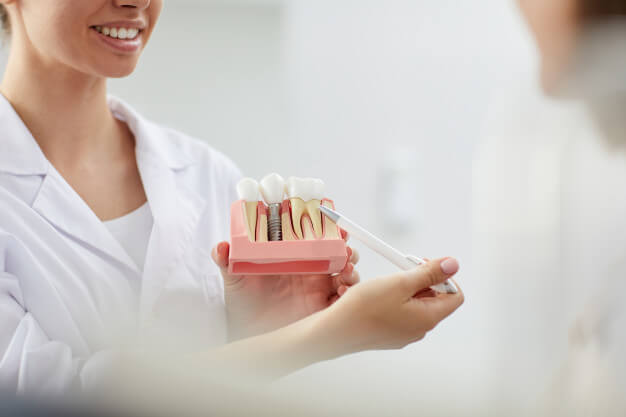
The implant itself is placed into the jawbone at the missing tooth site and functions as an artificial tooth root. Once the area has healed sufficiently, an abutment connects the implant to the final crown.
At Dental Gigi, our complete single tooth implant treatment uses a zirconia crown manufactured locally in Australia. The implant can function independently, so the neighbouring teeth do not need to provide support for the replacement tooth.
The timing of a single tooth implant in Perth depends on the condition of the site. In selected cases, an implant may be placed at the time a tooth is extracted. Other situations require the area to heal before implant placement, particularly where infection, bone loss or other clinical factors need to be addressed first.
Implant Bridges for Several Missing Teeth
Several missing teeth next to one another do not necessarily require an individual implant for every tooth.
An implant-supported bridge can use strategically positioned implants to support several replacement teeth. Dental Gigi’s implant bridge option uses two dental implants and two abutments to support three zirconia crowns.
This can provide a fixed alternative for suitable patients who have multiple adjacent missing teeth. The number of implants required is determined during planning rather than simply matching one implant to every missing tooth.
All-on-4 Dental Implants Perth
For patients who have lost most or all of the teeth in an upper or lower arch, individual implants for every missing tooth are generally unnecessary.
All-on-4 dental implants use four implants positioned within the jaw to support a complete arch of replacement teeth. This creates a different treatment pathway from a single tooth implant because the implants need to work together to support and distribute forces across the full restoration.
Dental Gigi also treats more complex full-arch cases where a different number or configuration of implants may be considered. For example, All-on-6 uses six implants rather than four to support a full-arch restoration.
The appropriate approach depends on the patient’s available bone, oral health, bite and individual treatment requirements. A detailed assessment is therefore required before deciding whether All-on-4, All-on-6 or another implant option is suitable.
Who May Be Suitable for Dental Implants?
Having a missing tooth does not automatically mean an implant can be placed immediately.
A dental implant needs an appropriate foundation. During assessment, the dentist looks at the proposed implant site as well as the health of the mouth more broadly.
Important considerations include:
- The amount and quality of bone available
- The position and spacing of the proposed implant
- Gum and periodontal health
- Oral hygiene
- Proximity to nerves, blood vessels and other anatomical structures
- Clenching or grinding habits
- Smoking
- Diabetes and other health conditions that may affect healing
Patients with active gum disease or other oral health problems may need these conditions managed before implant treatment begins.
Planning Dental Implants With 3D CBCT Imaging
Implant placement starts well before the day of surgery.
Dental Gigi uses detailed clinical assessment and, where appropriate, 3D CBCT imaging to understand the implant site. A CBCT provides three-dimensional information about the jaw that cannot be obtained from a standard two-dimensional dental image alone.
The dentist can assess the available bone and consider the planned position of the implant in relation to nearby structures. This information is then used when developing the surgical plan.
Careful planning is particularly important because the final position of an implant needs to accommodate the restoration that will eventually sit above it.
Guided Implant Surgery at Dental Gigi
Dental Gigi uses a guided method of implant placement.
Following the planning stage, a customised surgical guide can be manufactured for the patient’s treatment. The guide fits over the teeth or gums and provides a predetermined pathway for the planned implant position during surgery.
This means implant position is considered using the clinical examination and imaging before the procedure rather than being determined entirely during surgery.
The same principle applies whether treatment involves a single tooth or a more extensive implant restoration, although the complexity of planning differs between cases.
What Happens During Dental Implant Treatment?
The implant journey can extend over several months because the treatment needs to allow time for healing between stages.
The process begins with an examination of the teeth, gums, bite and proposed implant area.
Dental Gigi generally recommends establishing good overall oral health before proceeding with implant treatment. Existing decay, gum disease or other dental problems may need attention first.
A 3D CBCT may then be used to assess the jawbone, implant site and surrounding structures.
Once the proposed implant position has been planned, a customised guide may be manufactured for the procedure.
The implant system, size and position are selected according to the individual treatment plan.
During implant surgery, the titanium implant is placed into the planned position within the jawbone.
The area then needs time to heal. During this period, the bone forms around the implant through a process known as osseointegration, creating the foundation required to support the restoration.
Healing time varies between patients and can be influenced by the implant site, bone condition, health and complexity of treatment.
Once the implant is considered ready for restoration, impressions or digital records are taken and the final tooth is planned.
For a single implant, this normally involves an abutment and crown. Multiple implants may support a bridge, while full-arch treatment uses a larger prosthetic restoration.
Dental Gigi works with a professional dental laboratory in Perth, with implant crowns and abutments manufactured locally using original components.
What If There Is Not Enough Bone for an Implant?
To remain stable, an implant needs sufficient supporting bone.
Bone volume can decrease after a tooth has been missing for some time, and previous infection or other oral conditions can also affect the proposed implant site. Where there is insufficient bone, this does not necessarily rule out implant treatment.
Bone grafting may be considered to rebuild or strengthen the area before an implant is placed. Depending on the situation, graft material may come from the patient’s own bone, processed donor material or synthetic biocompatible material.
Healing following grafting can take several months. Once the area has healed, further imaging can help determine whether adequate bone is available to proceed.

How Soon After an Extraction Can an Implant Be Placed?
The timing depends on what the dentist finds at the extraction site.
An implant can sometimes be placed immediately after extraction when there is suitable healthy bone and the site is appropriate for immediate placement.
Where healing is required first, implant placement may be delayed for several months. Infection, significant bone loss or the need for bone grafting can extend this period further.
Rather than working to one standard timeframe, the implant site is assessed to determine when it is ready for the next stage.
Dental Implant Costs in Perth
The total cost of implant treatment depends largely on what needs to be replaced and the complexity of the treatment required.
Dental Gigi’s current implant options include:
Complete Dental Implant
-
1x Dental Implant
-
1x Abutment
-
1x Zirconia Crown
-
Implant Bridge
-
2x Dental Implant
-
2x Abutments
-
3x Zirconia Crowns
-
Complete Arch
-
4x Dental Implant
-
4x Abutments
-
1x Denture
-
These figures provide a starting point for understanding dental implant costs. Additional procedures can change the overall treatment required, particularly when extraction, bone grafting or more complex surgical planning is involved.
A consultation allows the dentist to assess the mouth first and provide a treatment plan based on the actual clinical requirements rather than an estimate based only on the number of missing teeth.
Why Dental Implant Costs Can Differ Between Patients
Two people replacing the same number of teeth can require quite different treatment.
Bone availability is one reason. An implant placed into an appropriate existing site has different requirements from treatment involving bone grafting or reconstruction beforehand.
The restoration also affects the total cost. A single zirconia crown, an implant-supported bridge and a complete arch each require different components and laboratory work.
The implant system, surgical planning, imaging and complexity of the procedure are other considerations. Dental Gigi uses established implant systems including Southern Implants, MIS Implants and Straumann, depending on the requirements of the case.
Dental Implants Compared With Other Ways to Replace Teeth
Implants are not the only way to replace a missing tooth.
A dental bridge uses neighbouring teeth for support, whereas a dental implant is supported within the jawbone. A removable denture can replace one, several or all missing teeth without implant surgery.
Each approach has different considerations involving the condition of the remaining teeth, bone, maintenance, treatment time and cost.
For patients considering several options, the useful question is not simply whether implants are better than dentures or bridges. It is which treatment is appropriate for the condition of the mouth and the patient’s individual circumstances.
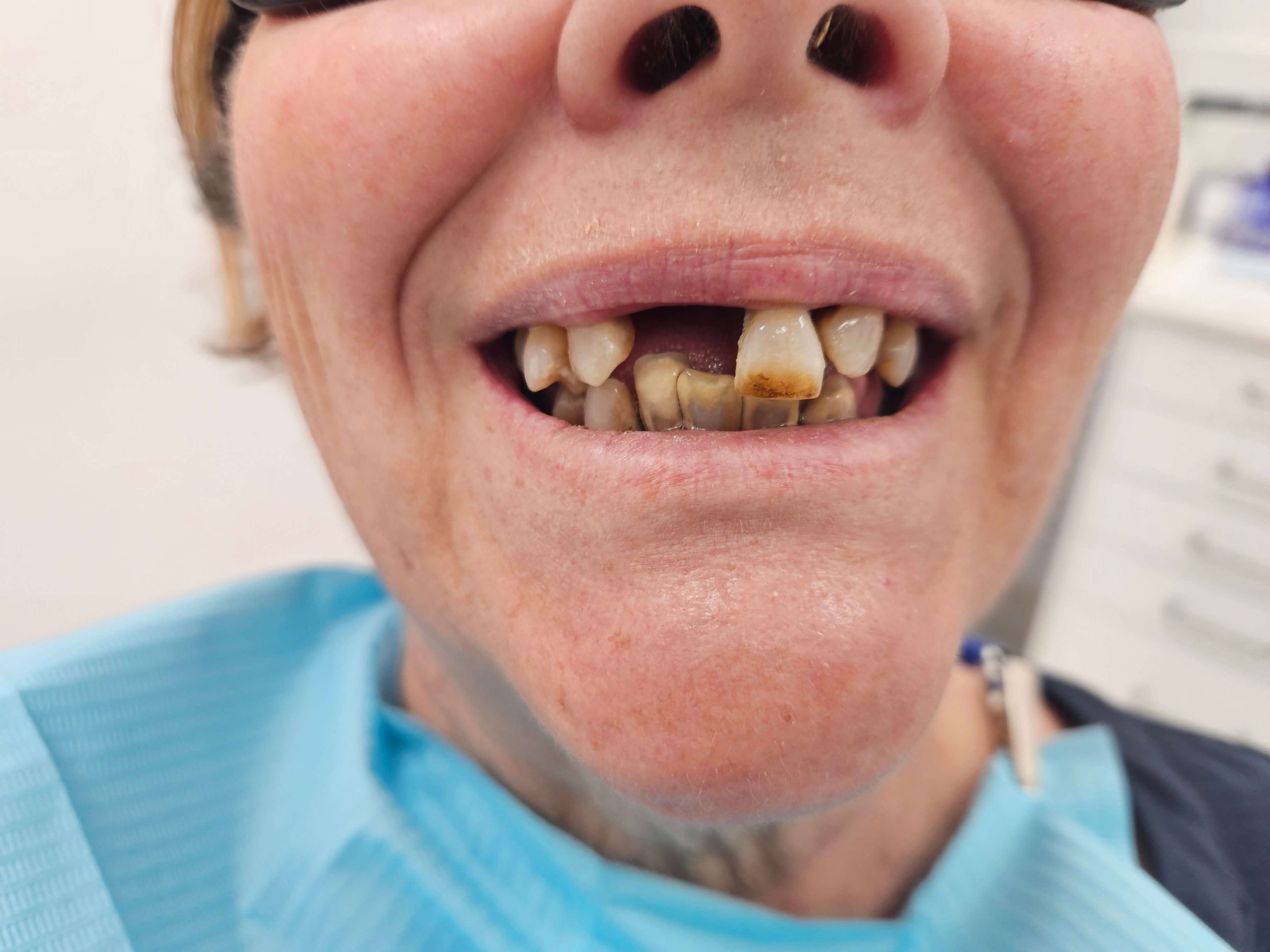
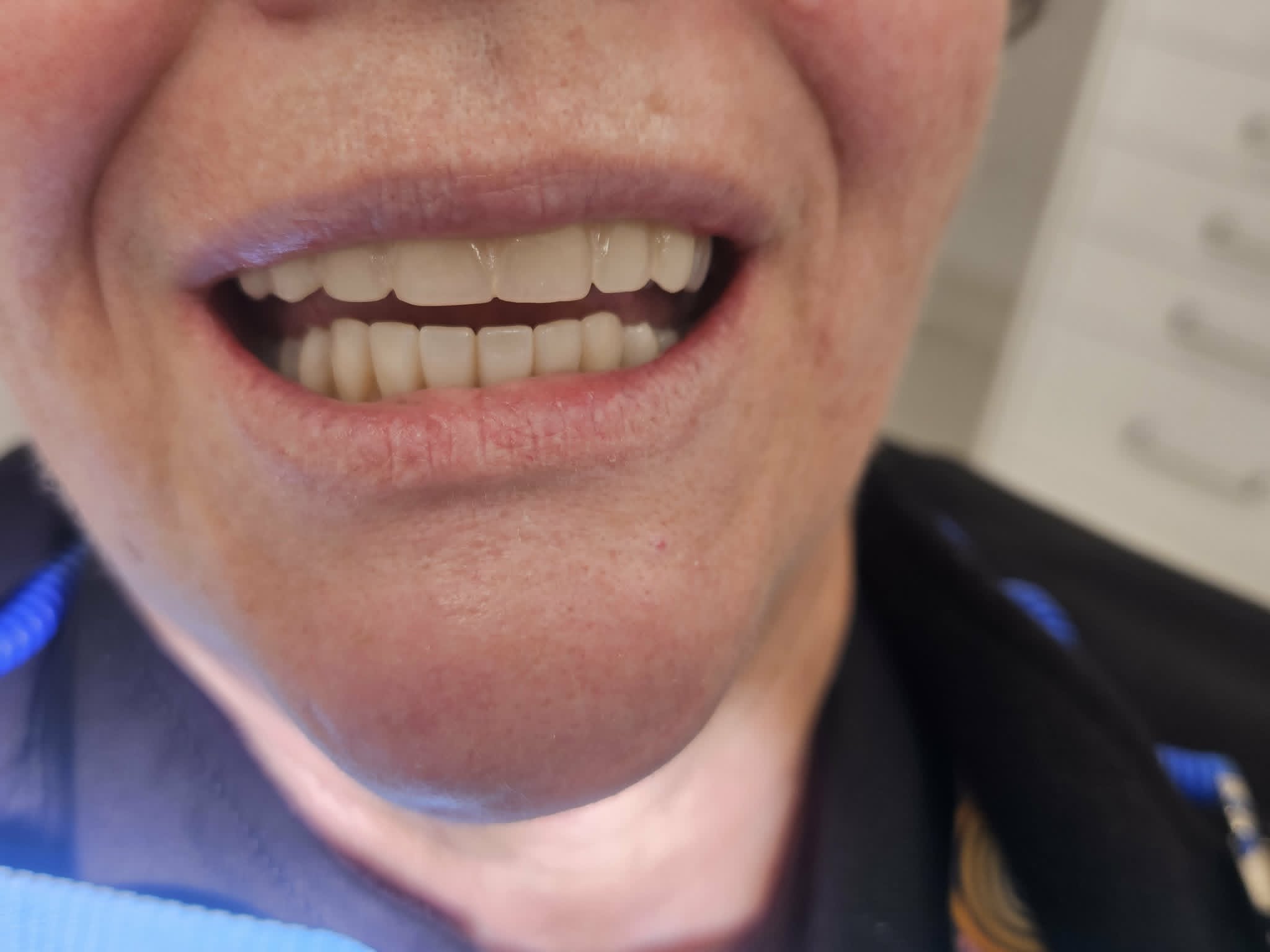
Looking After Dental Implants
Dental implants still require ongoing care.
Although an implant cannot develop tooth decay in the same way as a natural tooth, plaque and inflammation can affect the gum and supporting tissues around it. Daily brushing, appropriate interdental cleaning and regular professional maintenance remain important after treatment.
Full-arch implant restorations require particular attention underneath and around the prosthesis. Depending on the restoration, interdental brushes, flossing aids or a water flosser may be recommended to reach areas that a standard toothbrush cannot clean effectively.
Regular dental reviews also allow the implant, restoration, bite and surrounding tissues to be monitored over time.
Dental Implant Treatment at Dental Gigi
Dental implant treatment combines surgical planning with the restorative work required to replace the visible tooth or teeth.
Dental Gigi’s implant team includes Dr Sadha Shiv Gupta, who trained and graduated from the University of Western Australia and has a particular interest in implant dentistry. Dr Shiv is a member of the Australian Society of Implant Dentistry and International Congress of Oral Implantologists and has completed further professional development in this area.
Our approach incorporates clinical assessment, CBCT planning where appropriate, guided implant surgery and locally manufactured restorations. Treatment is planned around the individual site rather than applying the same implant pathway to every patient.
Patients consideringdental implants at our East Victoria Park dental clinic can arrange an assessment to discuss whether a single tooth implant, implant bridge or full-arch restoration may be appropriate.
Frequently Asked Questions About Dental Implants
Yes. Dental implants can be used to replace teeth in different areas of the mouth when the site is suitable. Position influences planning because front teeth have particular aesthetic considerations, while back teeth experience substantial chewing forces. Available bone and the position of surrounding structures also need to be assessed.
Multiple implants can be placed as part of the same treatment when clinically appropriate. This may be considered for separate missing teeth, an implant-supported bridge or a full-arch restoration. The number and position of implants are established during treatment planning.
A single implant crown is generally cleaned similarly to a natural tooth, although careful cleaning around the gumline remains important. Implant bridges and full-arch restorations can require additional cleaning underneath the replacement teeth using suitable interdental aids.
An implant needs to integrate sufficiently with the surrounding bone before it can reliably support the planned restoration. If integration does not occur as expected, the dentist will assess the implant and surrounding tissues and determine the appropriate next step. This can differ depending on the reason and condition of the site.
Some patients who currently wear dentures may be suitable for implant-supported treatment, including full-arch options. Existing bone levels, gum health, medical history and the condition of the mouth need to be assessed before determining whether implant treatment is possible.
Treatment time varies considerably. A straightforward implant still requires healing before the final restoration in many cases, while bone grafting, extraction healing or more extensive full-arch treatment can add further stages. Dental Gigi’s existing treatment pathway indicates that complete treatment may take approximately 5 to 12 months in some cases, depending on individual requirements.